
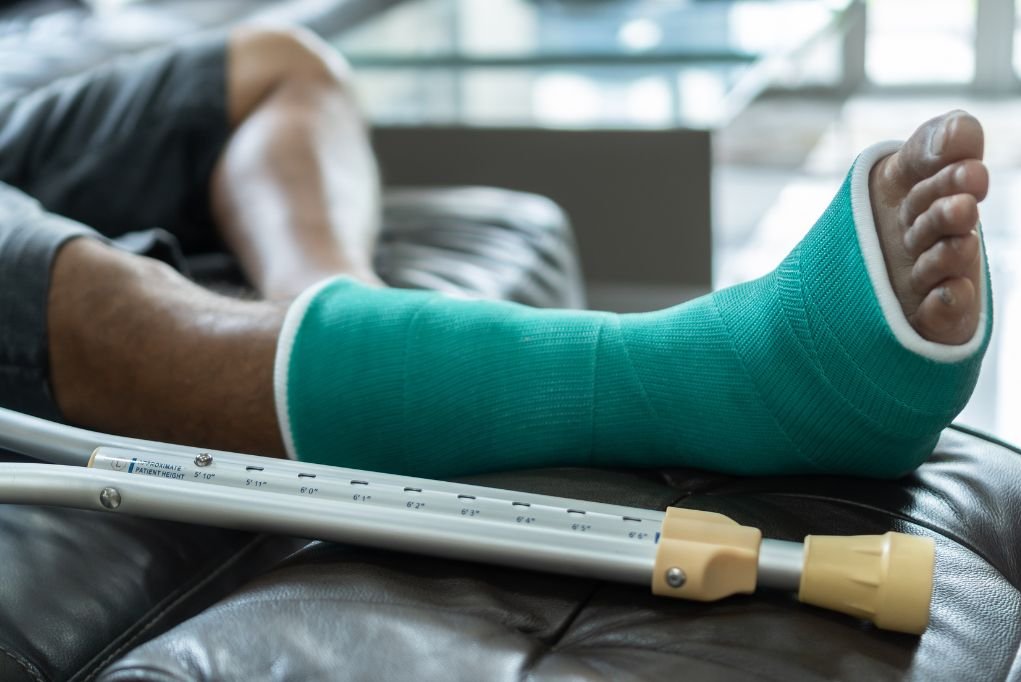
A fracture, commonly called a broken bone, occurs when a bone partially or completely breaks. Fractures can result from accidents, falls, sports injuries, direct impact, repetitive stress, or weakened bones. The symptoms and treatment depend on the location, pattern and severity of the fracture.
Understanding the different types of fractures can help you recognize warning signs and seek appropriate medical evaluation at the right time. A suspected fracture should be assessed by a qualified healthcare professional because it can sometimes be difficult to distinguish a fracture from a severe sprain or other soft-tissue injury.
What Is a Fracture?
A fracture is a crack or break in a bone. It can range from a small crack to a complete break in which the bone fragments become displaced.
Fractures commonly occur following high-impact trauma such as road accidents, falls or sports injuries. However, repetitive stress can cause stress fractures, while conditions that weaken bones can increase the risk of fractures following relatively minor trauma.
Common Types of Fractures
Fractures can be classified according to how the bone breaks, whether the skin is affected and how the bone fragments are positioned.
1. Simple or Closed Fracture
A closed fracture occurs when the broken bone does not penetrate the skin.
Although there may be significant pain, swelling or difficulty moving the affected area, there is no open wound directly communicating with the fracture.
Common features include:
- Pain and tenderness
- Swelling around the injury
- Bruising
- Difficulty moving the area
- Possible deformity
2. Open Fracture
An open fracture occurs when a broken bone breaks through the skin or there is a wound leading to the fracture.
These injuries require prompt medical assessment because the open wound can increase the risk of complications such as infection.
Possible signs include:
- Open wound near fracture
- Visible bone
- Significant bleeding
- Severe pain
- Deformity
An open fracture should be treated as a medical emergency and requires urgent professional care.
3. Transverse Fracture
A transverse fracture occurs when the break runs approximately straight across the bone.
It can happen following a direct blow or significant force applied to the bone. Treatment depends on factors such as the location of the fracture, stability and whether the bone fragments have moved.
4. Oblique Fracture
In an oblique fracture, the break runs diagonally across the bone.
This type of fracture can occur following a force applied at an angle. The stability and alignment of the fracture help determine the appropriate treatment approach.
5. Spiral Fracture
A spiral fracture occurs when a twisting force causes the fracture line to spiral around the bone.
It may occur during sports activities, falls or other injuries involving significant twisting forces. Medical evaluation is important to determine the extent and stability of the injury.
6. Comminuted Fracture
A comminuted fracture occurs when the bone breaks into multiple fragments.
These fractures can result from high-energy trauma such as serious accidents and may be more complex to manage. Treatment depends on the number and position of the fragments, the affected bone and other clinical factors.
7. Greenstick Fracture
Greenstick fractures are incomplete fractures in which the bone bends and cracks rather than breaking completely. They are more commonly seen in children because children’s bones are generally more flexible than adult bones.
The appropriate treatment depends on the location and severity of the fracture.
8. Stress Fracture
A stress fracture is a small crack in a bone caused by repetitive stress rather than a single major injury.
They are commonly associated with repetitive activities such as running and other high-impact physical activities. Symptoms may develop gradually rather than immediately following an accident.
Common signs include:
- Gradually increasing pain
- Localized tenderness
- Pain during activity
- Pain that may improve with rest
- Reduced ability to continue activity
Ignoring persistent pain from repetitive activity can allow a stress injury to worsen, so medical assessment may be appropriate.
Common Causes of Fractures
Fractures can happen in many different situations. Some of the most common causes include:
Accidents and Trauma
Road traffic accidents and other high-impact injuries can place considerable force on bones and cause fractures.
Falls
Falls are a common cause of fractures, particularly in the wrist, arm, ankle and hip.
Sports Injuries
Contact sports, running, jumping and sudden twisting movements can increase the risk of fractures.
Repetitive Stress
Repeated loading of a bone can result in a stress fracture, particularly in people involved in high-impact activities.
Weakened Bones
Conditions such as osteoporosis can make bones more susceptible to fractures, sometimes following relatively minor falls or impacts.
Symptoms of a Fracture
Symptoms can vary depending on the bone involved and the type and severity of the fracture.
Common symptoms include:
- Sudden or severe pain
- Swelling
- Bruising
- Tenderness
- Difficulty moving the affected area
- Difficulty putting weight on a limb
- Abnormal shape or deformity
- Reduced function of the injured limb
- Numbness or tingling in some cases
For example, a broken leg may cause pain, swelling, bruising, difficulty moving and difficulty putting weight on the affected leg.
A broken arm or wrist can similarly cause pain, swelling, bruising and difficulty moving the affected area.
How Is a Fracture Diagnosed?
If a fracture is suspected, a doctor will usually assess the injury, symptoms and physical findings. Imaging such as an X-ray is commonly used to confirm a fracture and understand its location and severity.
In some situations, additional imaging may be required depending on the suspected injury.
For example, X-rays are commonly used to evaluate suspected wrist fractures and help determine whether the bones have shifted.
Fracture Treatment Options
There is no single treatment for every fracture. Treatment depends on factors including:
- Type of fracture
- Location of the fracture
- Bone alignment
- Severity of injury
- Whether the fracture is open or closed
- Patient’s age and overall health
- Activity and functional requirements
Immobilization
Some fractures can be managed by keeping the affected bone stable using a cast, splint, sling or other support.
Realignment
If the broken bone fragments have moved out of their normal position, a doctor may need to realign them before immobilization.
Surgery
Some complex or unstable fractures may require surgery to restore alignment and stabilize the bone. Depending on the fracture, fixation may involve plates, screws, rods or other surgical methods.
Rehabilitation
After the fracture has sufficiently healed, rehabilitation may be recommended to restore movement, strength and function.
The recovery period varies considerably depending on the bone involved and the nature of the fracture.
What Should You Do If You Suspect a Fracture?
If you think you or someone else has fractured a bone, avoid unnecessary movement of the injured area and seek medical evaluation.
While waiting for medical help:
- Keep the injured area as still as possible
- Avoid putting unnecessary weight on it
- Control bleeding with appropriate pressure around a wound
- Do not try to straighten a visibly deformed limb
- Seek urgent medical attention for serious injuries
Keeping a suspected fracture still can help prevent further pain or injury before professional care is available.
When Is a Fracture an Emergency?
Some fracture-related symptoms require immediate medical attention.
Seek emergency care if:
- A bone is visible through the skin
- The limb appears severely deformed
- There is heavy bleeding
- The affected area becomes numb
- Fingers or toes become unusually pale, blue or cold
- There is severe or rapidly worsening pain
- You are unable to use the affected limb after significant trauma
These signs can indicate a serious injury requiring urgent assessment.
How Long Does a Fracture Take to Heal?
Healing time varies depending on the type and location of the fracture, the patient’s age and health, and whether complications are present.
For example, some broken ankles may take around 6–8 weeks to heal, while more complicated injuries may take longer.
Following your doctor’s instructions, attending follow-up appointments and completing recommended rehabilitation can support the recovery process.
Can Fractures Be Prevented?
Not every fracture can be prevented, particularly those caused by unexpected accidents. However, some measures may reduce the risk of certain injuries.
These may include:
- Using appropriate protective equipment during sports
- Maintaining muscle strength and balance
- Taking care to prevent falls
- Following safe exercise practices
- Allowing adequate recovery between strenuous activities
- Addressing bone-health concerns when advised by a doctor
For people at increased risk of fractures because of osteoporosis or other bone-health problems, medical evaluation can help identify ways to reduce future fracture risk.
Fracture Treatment in Hajipur
A suspected fracture should not be ignored, particularly when there is significant pain, swelling, deformity or difficulty using the affected limb.
Dr. Sumit Suryant, Orthopaedic & Trauma Surgeon at MM Ortho Care & Trauma Hospital, Hajipur, provides orthopaedic consultation for fractures, trauma, joint injuries and other orthopaedic conditions.
With qualifications including MBBS from AIIMS Patna and DNB Orthopaedics from Indraprastha Apollo Hospital, New Delhi, Dr. Sumit Suryant also specializes in complex trauma and limb reconstruction.
Book an Orthopaedic Consultation
MM Ortho Care & Trauma Hospital
Purani Gandak Pul Road, Johari Bazar,
Hajipur, Vaishali, Bihar
Phone: +91 77828 22762 | +91 79798 42737
Frequently Asked Questions
What is the most common type of fracture?
There is no single fracture type that is most common across all bones and populations. Common fractures include wrist, ankle, arm and other fractures associated with falls, accidents and sports injuries.
What are the first signs of a fracture?
Pain, swelling, bruising, tenderness, difficulty moving the affected area and deformity can be signs of a fracture. However, symptoms alone cannot always confirm whether a bone is broken.
Can a fracture heal without surgery?
Some fractures can heal with immobilization using a cast, splint or other support. Other fractures, particularly certain unstable or displaced injuries, may require surgical treatment. The appropriate approach depends on the individual fracture.
Do all fractures need an X-ray?
Many suspected fractures are evaluated using X-rays, but the appropriate investigation depends on the injury and clinical assessment.
What is a stress fracture?
A stress fracture is a small crack in a bone caused by repetitive loading or overuse rather than one major traumatic event.
When should I see an orthopaedic doctor for a fracture?
You should seek medical assessment if you suspect a fracture, particularly when there is significant pain, swelling, deformity, difficulty moving the limb or inability to bear weight.